Easy Gingerbread Man Ornament: Free Crochet Pattern
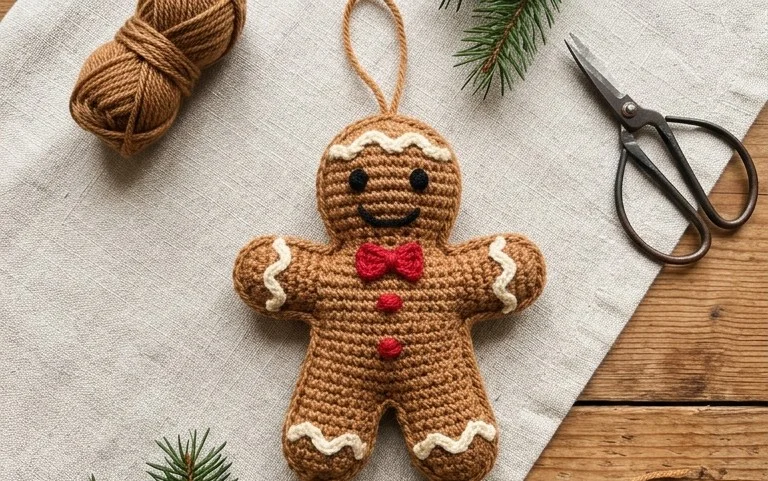
Warm brown yarn, a few white icing stitches, and tiny buttons give a crocheted gingerbread man the look of a little cookie without the crumbs. This soft ornament hangs neatly on a tree, a gift tag, or a kitchen hook, and it makes a thoughtful handmade present for friends who love holiday decorations. Beginners can enjoy the simple shapes and repeated single crochet stitches, while more experienced makers can add their own icing details or a bright scarf. In this pattern, you’ll learn how to crochet and shape the body, join the pieces, embroider the face, and finish a hanging loop. The small size makes it satisfying to complete in an evening, and using leftover worsted-weight yarn keeps the project practical. A little stuffing gives the finished figure a rounded feel without making it bulky.
Why You’ll Love This Pattern
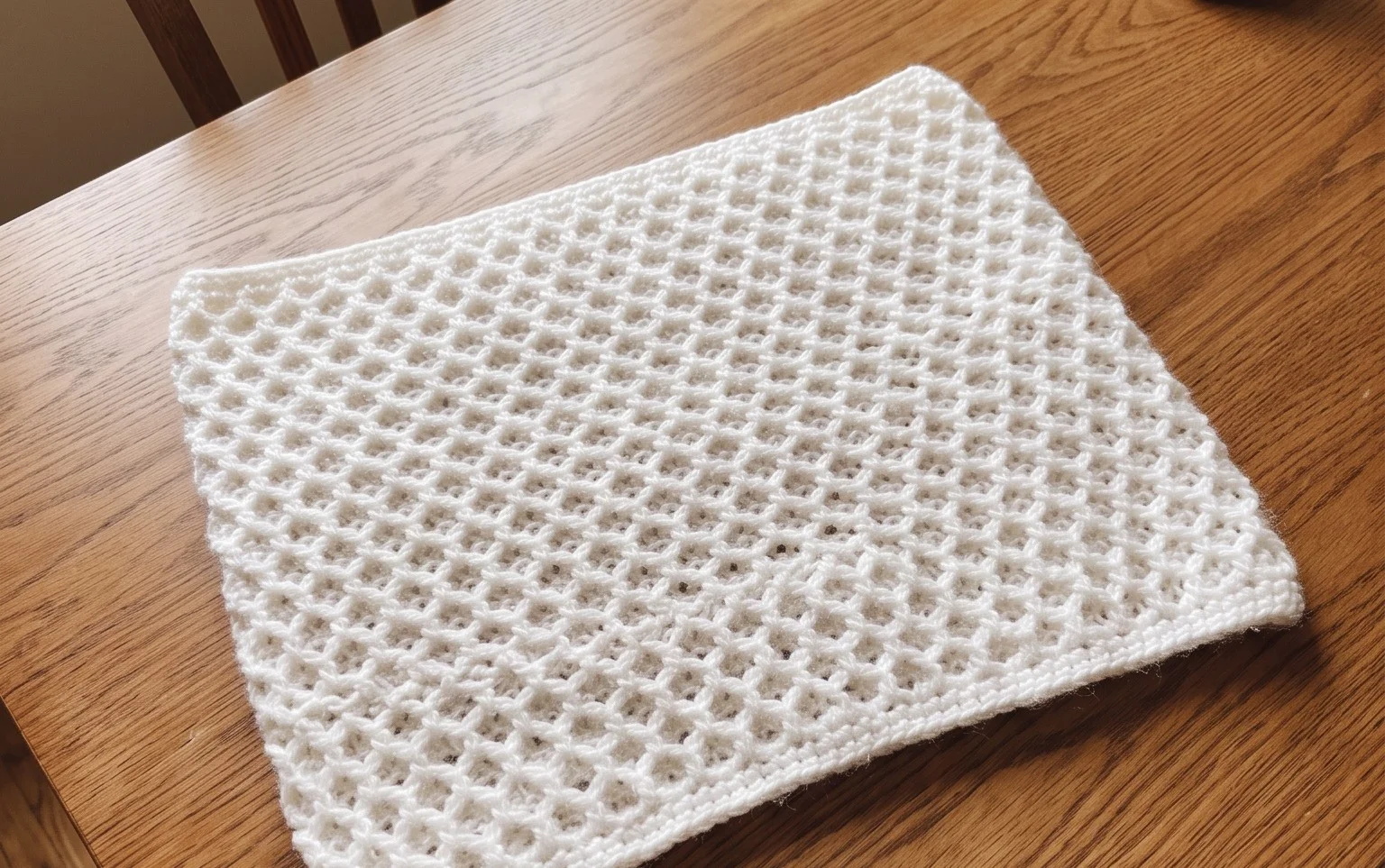
Worsted cotton makes a sturdy dishcloth with a soft, slightly ridged surface from simple single crochet rows. This beginner-friendly project uses one basic stitch and a manageable rectangle, so it is a useful way to practise keeping the edges even.
The cloth works well for kitchen cleanups and uses about one small skein of cotton yarn. Its plain construction is easy to follow while watching a show or listening to an audiobook, and the finished size is practical for everyday use.
The rows were easy to keep track of, and my finished cloth came out even after I started using a marker at the edge.
— Maya, beginner crocheter
Pattern Overview & Skill Level
- Skill Level: Beginner. You need to know how to chain and single crochet.
- Approximate Time: 3–4 hours, depending on your pace and tension.
- Construction: A flat rectangle worked in back-and-forth rows, then finished by weaving in the two yarn ends.
- Finished Dimensions & Sizing: About 10 × 10 in (25 × 25 cm) when blocked to the gauge below. Small differences are normal for a handmade cloth.
Materials & Supplies Needed
- Yarn: About 120 yd (110 m) of worsted-weight cotton yarn, also called medium weight or #4. One solid color is enough; a small amount of leftover cotton can be used if you join colors securely at row ends.
- Hook: 5.0 mm (US H-8). Use the hook that gives you a firm but comfortable fabric.
- Notions: Tapestry needle for weaving in ends, scissors, and a ruler or tape measure. A stitch marker can help mark the first stitch of each row.
- Substitutions: Choose a yarn labelled 100% cotton for good absorbency and heat tolerance. Cotton-linen blends can feel firmer and may drape less. Avoid acrylic for a cloth used with hot cookware, as it can be damaged by high heat. A different yarn weight will change the size and texture, so check the gauge before continuing.
Gauge: 12 sc and 14 rows measure about 4 in (10 cm) in single crochet. Make a small swatch and adjust your hook if needed. A tight gauge makes a stiff cloth; a loose gauge makes a larger, more open fabric.
Stitch Guide & Abbreviations (US Terms)
- ch: Chain.
- sc: Single crochet. Insert the hook in the stitch, yarn over and pull up a loop, yarn over again and pull through both loops.
- st / sts: Stitch / stitches.
- BLO: Back loop only. Work into the loop farthest from you at the top of the stitch. The unused front loop creates a subtle ridge.
- RS / WS: Right side, the side you choose to show; wrong side, the opposite side.
Turning chains do not count as stitches in this pattern. Work the first single crochet of each row into the first stitch, not into the turning chain.
Step-by-Step Pattern Instructions
Dishcloth
- Foundation: Ch 31. Keep the chain even but not tight so the first row can be worked comfortably.
- Row 1 (RS): Sc in the second ch from the hook and in each ch across. Turn. (30 sts)
- Row 2: Ch 1, sc in each st across. Turn. (30 sts)
- Rows 3–35: Repeat Row 2, turning at the end of every row. Each row has (30 sts). After Row 35, the cloth should measure about 10 in (25 cm) long at gauge.
Finishing
Fasten off, leaving a tail about 6 in (15 cm) long. Pull the tail through the last loop to secure it. Thread the tail onto a tapestry needle and weave it through several stitches on the wrong side, changing direction once so it stays put. Weave in the foundation tail the same way. Wash and lay the cloth flat to dry, gently shaping the corners and edges to a square.
Care & Washing Instructions
- Wash cotton in cool or warm water, up to about 40°C (104°F), with similar colors.
- Dry flat or tumble dry on low; reshape the edges while the cloth is damp.
- Block by pinning the damp cloth to a square shape and letting it air-dry; follow the yarn label if its fiber blend differs.
Pro Tips & Common Mistakes to Avoid
- Keep the foundation chain and first row relaxed. If the bottom edge pulls inward, remake the chain with a slightly larger hook, then use the 5.0 mm hook for the rows.
- Count the 30 stitches at the end of every row. Place a marker in the first stitch if it is easy to overlook the edge stitch after turning.
- When weaving in ends, pass the yarn through the backs of several stitches and change direction. Do not pull so tightly that the fabric puckers.
- For a wider cloth, add an even number of chains and work one fewer single crochet than the number of chains. Add rows for extra length. A larger cloth takes more yarn, so allow roughly 10–15 yd (9–14 m) for each additional 4 in (10 cm) of width or length.
Frequently Asked Questions
Can I use a different cotton yarn?
Yes. Choose a similar worsted-weight cotton and make a gauge swatch first. A thinner yarn creates a smaller, lighter cloth; a thicker yarn makes a larger, denser one and may need a larger hook.
How can I make the dishcloth smaller or larger?
Change the foundation chain to adjust the width, keeping one fewer stitch than the chain count. Add or remove rows to adjust the length. Measure as you work, since different yarns and tension change the finished dimensions.
Is this pattern suitable for a first crochet project?
Yes. It uses chains and single crochet in straight rows, with no shaping or joining. The main thing to watch is the first and last stitch of each row, where missed stitches can make the sides narrow.
May I sell dishcloths made from this pattern?
Check the designer’s terms before selling finished items, and follow any credit or photography requirements. This pattern’s instructions do not determine the rules for a separate designer’s pattern.
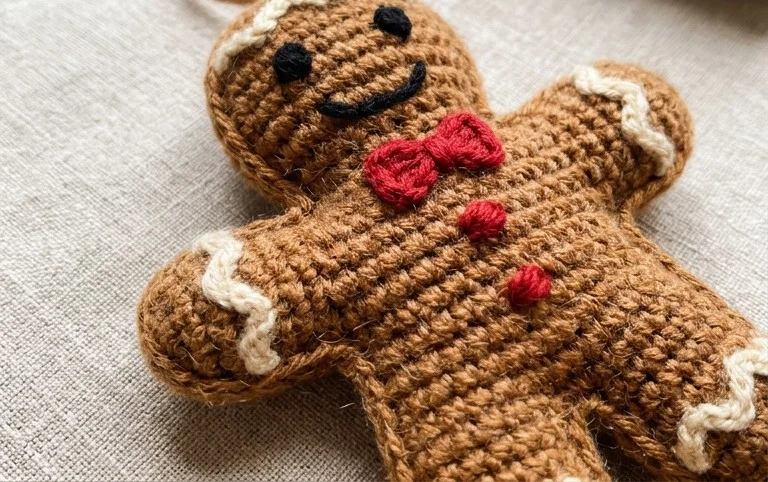
Your finished gingerbread man has a soft, cheerful look that brings a handmade touch to a holiday tree, a wrapped present, or a winter display. For a simple variation, use cream yarn for a gingerbread cookie with pale icing, or choose a brighter color for the buttons and scarf. Before hanging it, check that the loop is secure and that the embroidered details are firmly fastened, especially if the ornament will be handled often. Take a photo of your finished piece and share it on Pinterest or social media so other makers can see your color choices. When you’re ready for another small seasonal project, explore more free crochet patterns on the blog.