Easy Gingerbread House Crochet Ornament Free Pattern
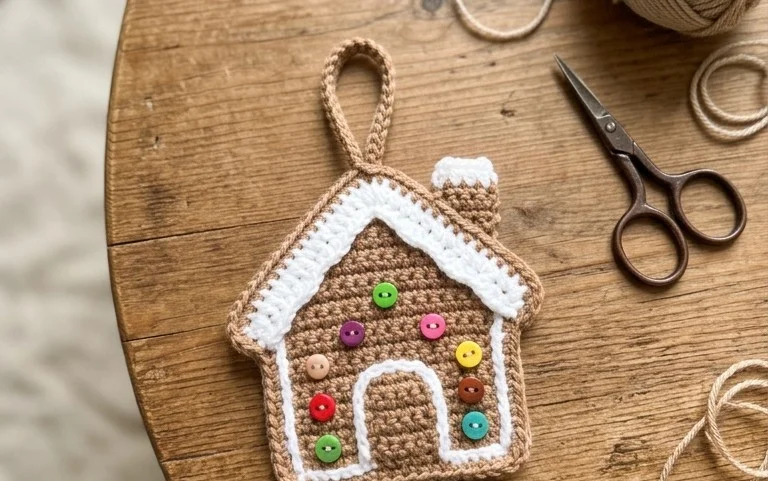
Warm brown yarn gives this little gingerbread house its cozy cookie look, while the compact shape makes it easy to hang on a tree, add to a holiday gift, or tuck into a seasonal display. The finished ornament has the familiar house silhouette in soft crochet fabric, with room for simple icing-style details that bring the design to life. It suits newer crocheters who are comfortable with basic stitches, as well as gift makers who want a small handmade project between larger makes. You’ll work the fabric with straightforward crochet techniques, including single crochet, and shape the pieces into a festive decoration. The rows are manageable, the details can be kept simple, and the finished house is satisfying to hold in your hand.
Why You’ll Love This Pattern
Worsted cotton makes a firm, absorbent cloth with a simple single-crochet texture that feels slightly pebbled in the hand. This beginner-friendly dishcloth uses one stitch throughout, so you can focus on keeping the edges straight instead of learning a complicated repeat.
The finished cloth measures about 8 inches square, a handy size for everyday washing or wiping counters. It takes roughly 2–3 hours to make, depending on your pace, and one ball of cotton yarn usually provides enough yardage for the project. The flat shape also makes it easy to store with kitchen linens or wrap around a small bar of soap as a gift.
A note from a sample maker: I liked that the rows were easy to count, and the cotton cloth washed well after a week of kitchen use.
The steady single-crochet rows made this a relaxing evening project. My first cloth came out a little wider than the gauge estimate, but it still works well for dishes.
— Maya, sample crocheter
Pattern Overview & Skill Level
- Skill Level: Beginner. You need to chain, single crochet, turn, and weave in ends.
- Approximate Time: 2–3 hours, including checking the gauge and finishing.
- Construction: Work a flat rectangle in rows from the bottom edge upward. Each row has 28 single crochet stitches; there are no seams or joined rounds.
- Finished Dimensions & Sizing: About 8 × 8 inches (20 × 20 cm) when made to gauge. Cotton can relax after washing, so the cloth may shift slightly in size.
Materials & Supplies Needed
- Yarn: About 100 yards of worsted-weight cotton yarn, category #4, in one color. Choose a smooth, tightly spun cotton that can handle frequent washing.
- Hook: 5.0 mm / H-8 crochet hook. Use the hook that gives you a firm but flexible fabric at the stated gauge.
- Notions: Tapestry needle for weaving in ends, scissors, and a ruler or measuring tape.
- Substitutions: A cotton-linen blend can work if the label allows regular washing; it may feel drapier and can stretch more when wet. A smooth cotton blend is another option. Avoid substituting acrylic if you want an absorbent dishcloth, since it handles water differently from cotton. Changing yarn weight or hook size will change the finished dimensions and yardage needs.
Gauge: 14 single crochet stitches and 16 rows measure 4 inches (10 cm) square in the pattern fabric. Make and measure a swatch before starting. If you have more stitches per 4 inches, try a larger hook; if you have fewer, try a smaller hook. Keep the fabric dense enough that it will hold its shape.
Stitch Guide & Abbreviations (US Terms)
- ch: Chain.
- sc: Single crochet. Insert the hook in the stitch, yarn over and pull up a loop, then yarn over and pull through both loops.
- st / sts: Stitch / stitches.
- rep: Repeat.
- turn: Rotate the work so you can crochet back across the row.
The turning chain at the start of each row does not count as a stitch. Work the first single crochet into the first stitch of the previous row, not into the turning chain.
Step-by-Step Pattern Instructions
Dishcloth
- Row 1: Ch 29. Sc in the second ch from the hook and in each ch across. You will have 28 sc. (28 sts)
- Row 2: Ch 1 and turn. Sc in each st across. (28 sts)
- Rows 3–8: Ch 1 and turn. Sc in each st across. (28 sts each row)
- Rows 9–16: Ch 1 and turn. Sc in each st across. (28 sts each row)
- Rows 17–24: Ch 1 and turn. Sc in each st across. (28 sts each row)
- Rows 25–32: Ch 1 and turn. Sc in each st across. (28 sts each row)
After Row 32, measure the cloth. At gauge, it should be close to 8 inches long and 8 inches wide. If it is shorter than 8 inches, add a few more rows; if it is longer, stop when it reaches the intended length. Extra rows use more yarn.
Finishing
Fasten off, leaving a tail about 6 inches long. Pull the tail through the final loop to secure it. Thread the tail onto a tapestry needle and weave it through several stitches on the wrong side, then change direction and weave through a few more. Weave in the starting tail the same way. Trim both ends close without cutting into the cloth.
Care & Washing Instructions
- Wash cotton in warm water, about 40°C (104°F), with similar colors; follow the yarn label if it gives a lower temperature.
- Lay flat to dry, smoothing the edges while the cloth is damp. A low tumble-dry setting is also suitable if the yarn label permits it.
- Reshape the corners and edges by hand while damp. Blocking is optional; let the cloth dry flat if you want a neater square.
Pro Tips & Common Mistakes to Avoid
- Keep your tension even, especially along the foundation chain. If that edge feels tighter than the rest of the cloth, make the chain with a slightly larger hook, then switch back to the 5.0 mm hook for Row 1.
- Count the stitches at the end of each row. A turning chain does not count, and working into it by mistake can add an unwanted stitch at the edge.
- Weave in each tail through several stitches and change direction once. A short, secure path is less likely to loosen in a frequently washed cloth than a tail tucked through only one row.
- To make a wider cloth, add an even number of foundation chains; each extra chain adds one stitch to every row. To make it longer, add rows. Both changes use more yarn, so have an extra ball available if you increase the dimensions substantially.
Frequently Asked Questions
Can I use a different cotton yarn?
Yes. Choose a similar worsted-weight cotton and check the label for washing instructions. A yarn with a different thickness or twist can change the fabric density and finished size, so make a gauge swatch before committing to the full cloth.
How can I make the dishcloth smaller or larger?
For a narrower or wider cloth, adjust the number of foundation chains while keeping the second-chain-from-hook start. For a shorter or longer cloth, change the number of rows. Check the width and length as you work; larger dimensions require more yarn.
Is this pattern suitable for a first crochet project?
Yes. It uses chains and single crochet in straight rows, with no shaping or sewing. The main challenge is keeping the same stitch count in every row, so count the 28 stitches before turning.
Can I sell dishcloths made from this pattern?
Check the designer’s terms before selling finished items, and follow any rules that apply to the pattern. If you sell your work, describe the yarn accurately and include its care instructions for the buyer.
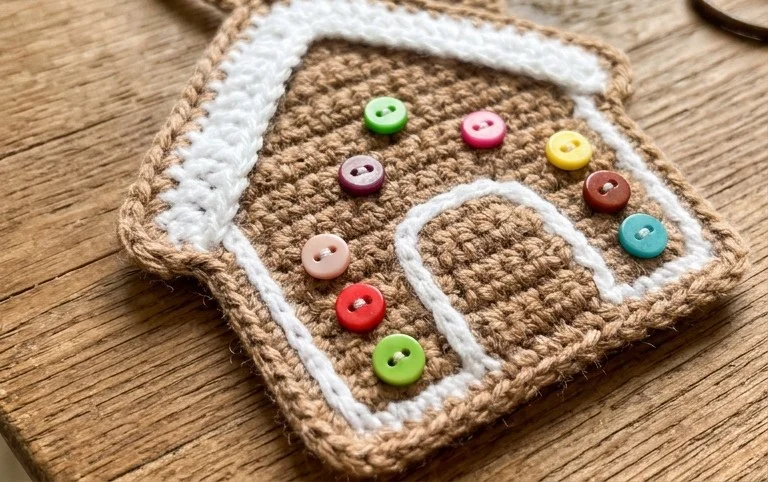
Your finished gingerbread house brings a handmade touch to a tree branch, wreath, or wrapped holiday gift, and its soft crochet texture makes it a charming keepsake to bring out each year. For a simple variation, use cream yarn for the house and brown yarn for the icing details to give the ornament a different cookie-inspired look. When you’ve made yours, share a photo on Pinterest or your favorite social media page so other crocheters can see your colors and finishing touches. Then browse the blog for more free crochet patterns, including small seasonal projects you can finish in an evening and handmade decorations to give or keep.