Free Holiday Stocking Crochet Pattern with Easy Colorwork
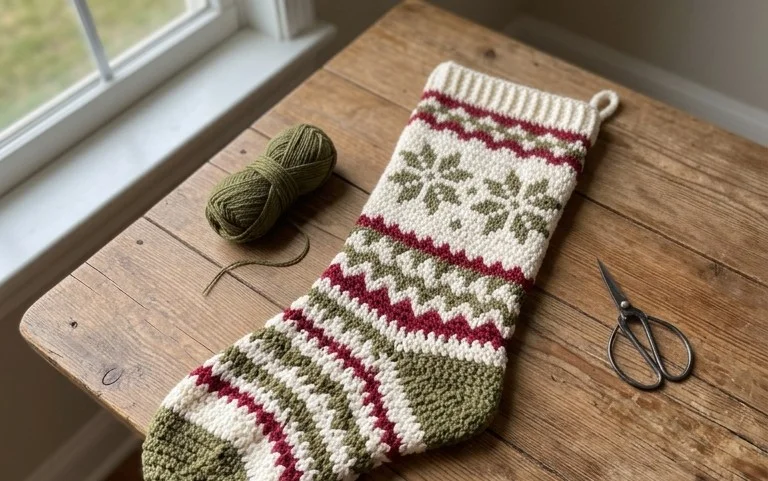
A crocheted holiday stocking has a soft, handmade texture that feels right at home hanging by the fireplace or tucked into a gift basket. Colorwork gives the fabric a little extra character, and you can choose shades that match your decorations or make a stocking that feels personal to its recipient. This project suits newer crocheters who are ready to practice changing colors, as well as experienced makers looking for a thoughtful handmade gift. The finished stocking is satisfying to watch take shape as the color pattern appears row by row. Along the way, you’ll learn how to manage color changes neatly and keep your stitches even, so the fabric looks tidy on both sides. Set aside a few quiet crafting sessions and make a decoration you can bring out year after year.
Why You’ll Love This Pattern
A firm cotton dishcloth is useful at the sink, and this beginner-friendly pattern makes one with only chain stitches and single crochet. The flat rows are easy to count, so you can work a few rows at a time without keeping track of a complicated repeat. Cotton yarn gives the finished cloth a textured, absorbent feel, and a single skein usually provides enough yarn for one cloth with some left over.
The simple shape is also handy for practicing even edges. You can use it as a dishcloth, a small cleaning cloth, or a practical handmade gift. Choose a color that suits your kitchen, or use leftover cotton yarn for a striped version by changing colors at the end of a row.
The rows were easy to keep track of, and the cotton made a sturdy cloth I can use every day.
— Mara, pattern tester
Pattern Overview & Skill Level
- Skill Level: Beginner. You need to know how to chain and single crochet.
- Approximate Time: 2–3 hours, depending on your pace and how often you pause to count.
- Construction: A flat rectangle worked back and forth in rows, then fastened off and woven in.
- Finished Dimensions & Sizing: About 8 × 8 inches (20 × 20 cm) after washing and drying flat. The size is based on the gauge below; small differences in tension will change the measurements.
Gauge: 16 single crochet stitches and 18 rows measure 4 × 4 inches (10 × 10 cm) in single crochet, measured without stretching. Make a small swatch before starting if you want the finished cloth to match the stated size. If your swatch is wider than 4 inches, try a smaller hook; if it is narrower, try a larger hook.
Materials & Supplies Needed
- Yarn: About 70 yards (64 m) of worsted-weight cotton yarn, also called medium weight or category #4. Use 100% cotton for an absorbent cloth. One solid color is simplest; you can also use two cotton colors for stripes.
- Hook Size: 5.0 mm / H-8 crochet hook. Use the hook that gives the gauge above, since hand tension varies.
- Notions: Tapestry needle for the yarn tails, scissors, and a ruler or tape measure. A stitch marker is optional for marking the first stitch of a row.
- Substitutions: Cotton-linen yarn can make a firm cloth with a slightly nubby texture. A cotton blend may feel softer, but check its care label before using it for frequent washing. A different yarn weight changes the cloth’s size and thickness; use a hook suited to the yarn and expect to need more or less yardage.
Stitch Guide & Abbreviations (US Terms)
- ch: Chain. Yarn over and pull through the loop on the hook.
- sc: Single crochet. Insert the hook into the stitch, yarn over and pull up a loop, then yarn over and pull through both loops on the hook.
- st / sts: Stitch / stitches.
- US terms: All stitch names in this pattern use standard US crochet terminology. The cloth is made with single crochet stitches worked in both loops of each stitch.
Step-by-Step Pattern Instructions
Dishcloth
Use the 5.0 mm hook and cotton yarn. Keep the turning chain loose so the sides do not pull inward. The turning chain does not count as a stitch throughout this pattern.
- Foundation: Ch 33.
- Row 1: Sc in the second ch from the hook and in each ch across. Turn. (32 sts)
- Rows 2–36: Ch 1, sc in each st across, turn. Repeat this row 35 times, for 36 rows total. (32 sts per row)
After Row 36, check that the cloth measures close to 8 inches square. It may look a little uneven before washing; cotton fabric often settles after it is rinsed and dried flat.
Finishing
Cut the yarn, leaving a tail of about 6 inches (15 cm). Pull the tail through the loop on your hook to fasten off. Thread the tail onto a tapestry needle and weave it through the backs of several stitches, changing direction once to help secure it. Weave in the starting tail the same way. Trim the ends close to the fabric without cutting into the stitches. Wash and dry the cloth according to the yarn label, then measure it again.
Care & Washing Instructions
- Wash 100% cotton in warm water, up to 40°C (104°F), with like colors; use the yarn label’s instructions if they differ.
- Dry flat for the neatest shape, or tumble dry on low only if the yarn label allows it.
- Reshape the damp cloth by smoothing the edges and corners flat; blocking is usually unnecessary for a dishcloth.
Pro Tips & Common Mistakes to Avoid
- Keep an even edge: Work the first single crochet into the first stitch, directly below the turning chain. Because the chain does not count as a stitch, skipping that first stitch will make the cloth narrower.
- Count each row: Check for 32 stitches before turning. Place a marker in the first stitch of a row if you tend to lose track at the edges; move it as you work.
- Use a relaxed grip: Tight chains can make the lower edge narrower than the rest of the cloth. If the foundation edge feels stiff, remake it with a larger hook, then switch back to the 5.0 mm hook for Row 1.
- Adjust size with care: To make the cloth wider, add chains to the foundation, then work one fewer single crochet than the number of chains. Add rows to make it longer. Larger dimensions use more yarn, so keep extra cotton on hand.
Frequently Asked Questions
Can I use acrylic yarn instead of cotton?
You can, but acrylic is less absorbent than cotton and may not work as well for wiping dishes. It can also feel different after washing. Check the label for washing and drying instructions, and make a gauge swatch because a substitute yarn may change the cloth’s size.
How do I make the dishcloth smaller or larger?
For a narrower cloth, chain fewer stitches, keeping the foundation chain count odd so the first single crochet leaves an even number of stitches. Work one fewer single crochet than the number of chains. Add or remove rows to change the length. A larger cloth takes more yarn and more time.
Is this pattern suitable for a first crochet project?
Yes. It uses only chain stitches and single crochet, with no shaping, color changes, or joining. The main thing to watch is the stitch count: count 32 stitches in every row so the sides stay straight.
Can I sell dishcloths made from this pattern?
You can sell your finished handmade item if the designer’s terms allow it. Check the terms that came with the pattern before listing your work, and describe the item as handmade rather than presenting the pattern as your own.
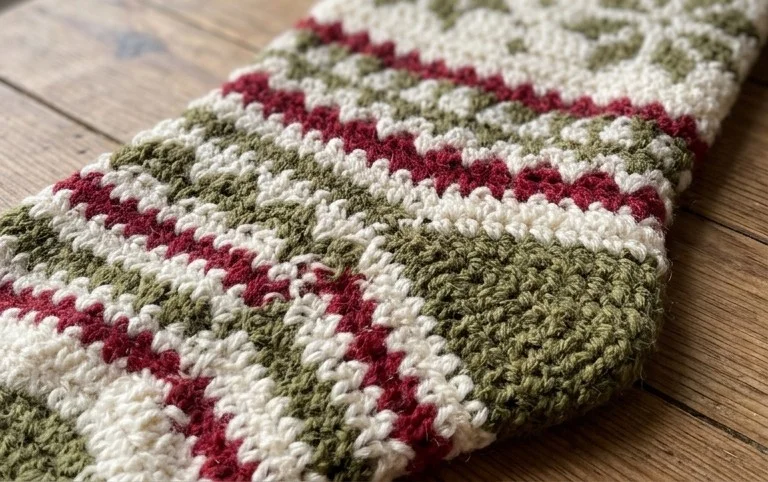
Finishing this stocking gives you a handmade holiday decoration with color and character, ready to hang up or fill with small treats. For a simple variation, choose a different pair of colors to match your tree, mantel, or the person who will receive it. If you want to change the size, remember that a different yarn weight or hook can affect the finished measurements, so check your gauge as you go. I’d love to see the colors you choose, so share a photo on Pinterest or your favorite social media channel. When you’re ready for another project, take a look through the blog’s free crochet patterns for more seasonal makes and useful gifts.